
What lizards live in Oregon? Here are some of the most common species
Oregonians are no strangers to lizards. Whether they’ve come upon one scurrying across a walking path, stuck in…
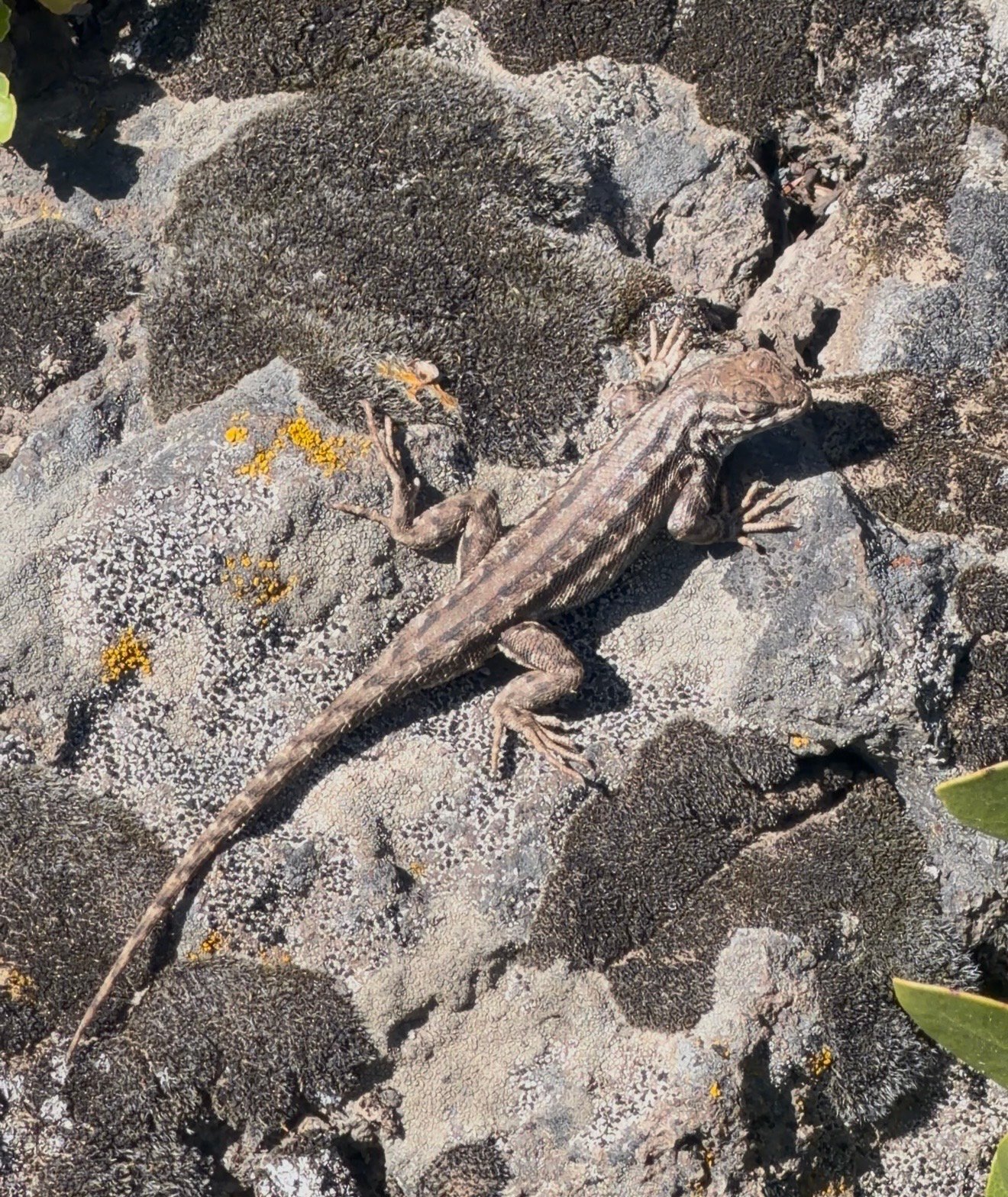
Oregonians are no strangers to lizards.
Whether they’ve come upon one scurrying across a walking path, stuck in a kitchen cupboard, or blending into the bark of a nearby tree, most Oregonians can say they’ve seen a lizard.
Oregon’s lizard population can be traced back millions of years, but how many species of lizards does the state have today?
Here’s what to know about Oregon’s lizards and where to find them.
How many species of lizards does Oregon have?
There are at least 15 different species and subspecies of lizards found in Oregon.
What is the most common lizard in Oregon?
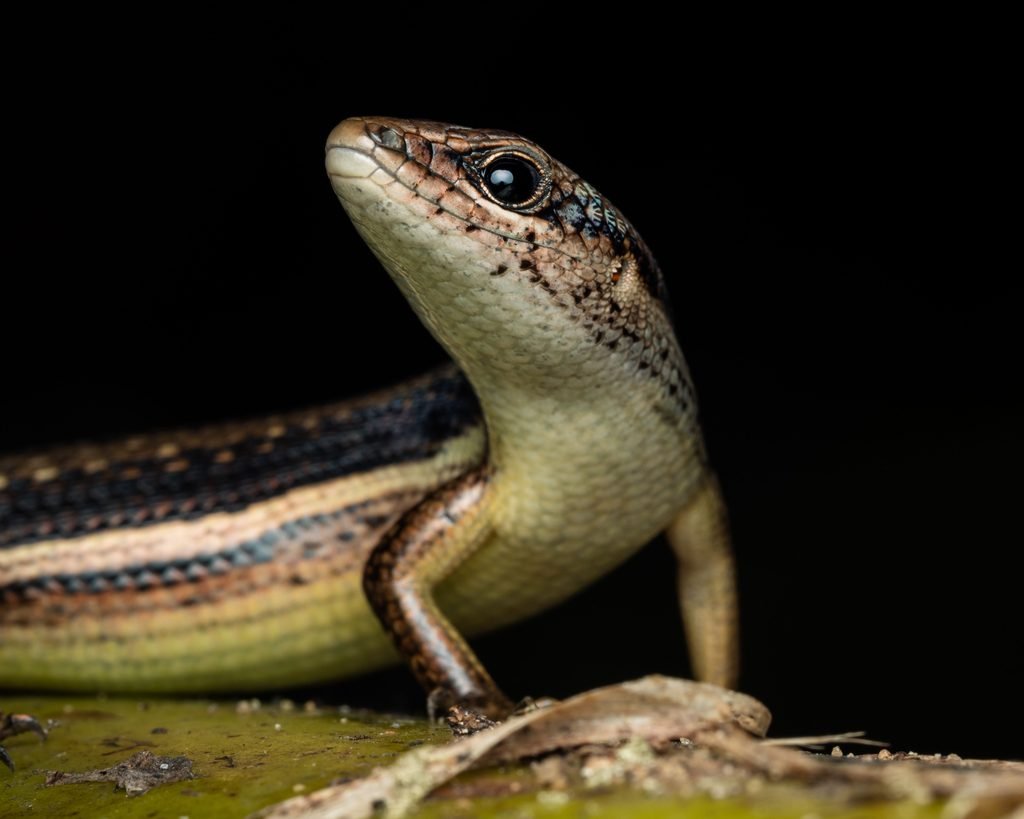
The Western Skink (Plestiodon skiltonianus)
The western skink is the most common lizard in Oregon, according to the Oregon Department of Fish and Wildlife.
Appearance: The western skink, also known as the “blue-tailed lizard,” can grow between 2 and 4 inches long from snout to vent and up to 8 inches in total length. It can be identified by its bright blue tail and the brown, black, and cream-colored vertical stripes running down the length of its body. It is a smooth, glossy-scaled lizard with small limbs that, while secretive, is most active during the spring and summer.
Habitat and diet: The skink prefers moist environments but tends to avoid heavily forested areas. It can usually be found in riparian areas near rivers, lakes, and streams throughout Oregon. Its habitat includes grasslands, desert scrub, and coniferous and juniper forests. Its diet consists of grasshoppers, moths, beetles, spiders, flies, and earthworms.
When threatened, the western skink may bite. More commonly, it will release its tail, which wiggles violently to distract predators while the lizard escapes. The tail eventually grows back over time, sometimes misshapen or a different color.
What is a horny toad?
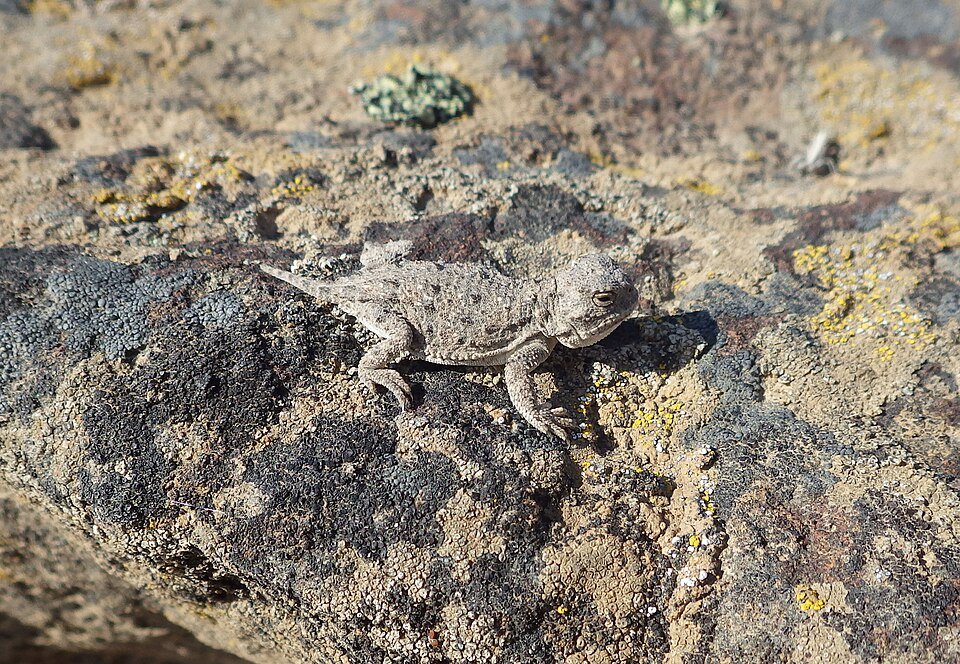
Oregon has two subspecies of horned lizards that, because of their wide, flat appearance, are sometimes called “horny toads.” They include:
Pygmy Short-Horned Lizard (Phrynosoma douglasi)
- Appearance: The pygmy short-horned lizard grows up to 2.5 inches long from snout to vent and up to 3.5 inches in total length. It can be identified by its small, wide, flat body and small nub-like horns protruding from the top of its head. Its coloring is mostly gray or tan with speckles of brown, orange, yellow, and tan. Its plump body is rimmed with spiky scales that span its length. This lizard tends to blend into its habitat, so colors can vary depending on the region where it lives.
- Habitat: The pygmy short-horned lizard lives mostly in central and eastern Oregon and is unique to the Northwest. As a burrowing lizard, it prefers the open sandy soils found in Oregon’s sagebrush deserts, juniper woodlands, and coniferous forests.
- Diet: This lizard primarily feeds on ants but is also known to eat beetles, caterpillars, spiders, and sowbugs.
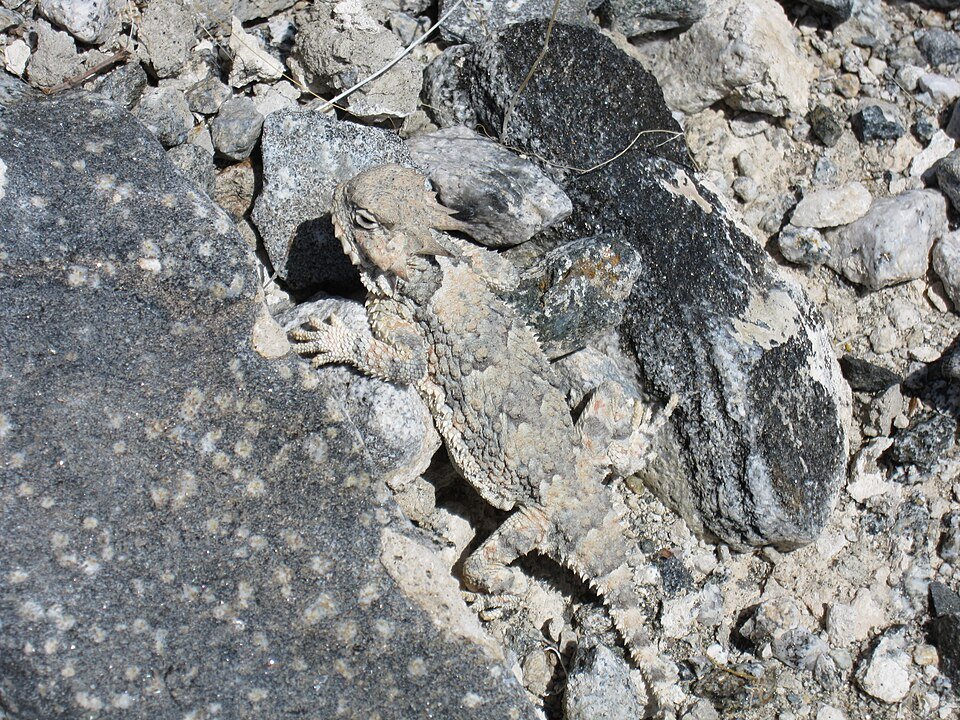
Desert Horned Lizard (Phrynosoma platyrhinos)
- Appearance: The desert horned lizard grows between 2 and 4 inches long from snout to vent and up to 6 inches in total length. It can be identified by its wide, flat body, granular pointed scales, and a prominent crown of horns protruding from the top of its head. Its coloring is mostly light tan or gray with speckles of brown, rust-red, and orange. It also has noticeable dark blotches on each side of its neck.
- Habitat: This lizard can be found in southeastern Oregon in desert basins below 5,000 feet in elevation. Isolated populations can be found in Lake and Harney counties among dry lake beds. It prefers sandy or gravelly desert flats among sagebrush or salt-desert shrub.
- Diet: This lizard primarily feeds on ants and beetles but is also known to eat larvae, grasshoppers, crickets, flies, and spiders.
What is an alligator lizard?
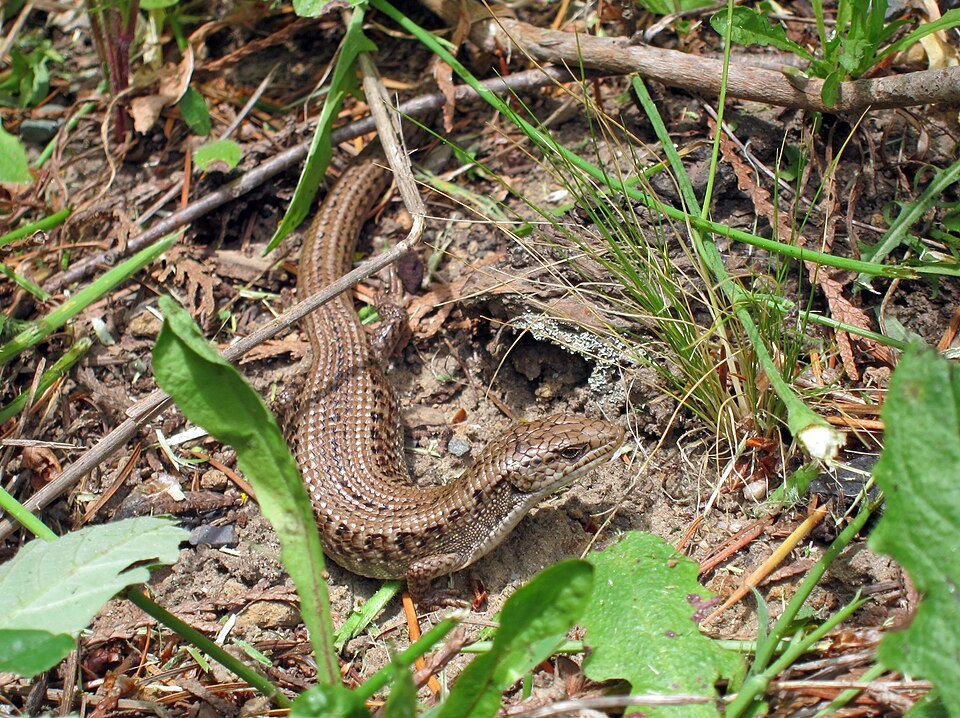
The alligator lizard is a species found only along the North American West Coast. Oregon has two species of alligator lizard, including:
Northern Alligator Lizard (Elgaria coerulea)
- Appearance: Can reach up to 12 inches in length from snout to tail and is identified by its long, thick torso, large wedge-shaped head, long tail, and alligator-like appearance. Its coloring is usually olive green with mottled dark bands.
- Habitat: Typically lives in the riparian areas of Oregon’s coastal and coniferous forests. This lizard prefers cool, damp environments and is the only type of lizard found along the Oregon coast, according to ODFW.
- Diet: The northern alligator lizard is carnivorous and feeds on small invertebrates like ticks, spiders, millipedes, snails, termites, and beetles, along with occasional small birds, mammals, and other lizards.
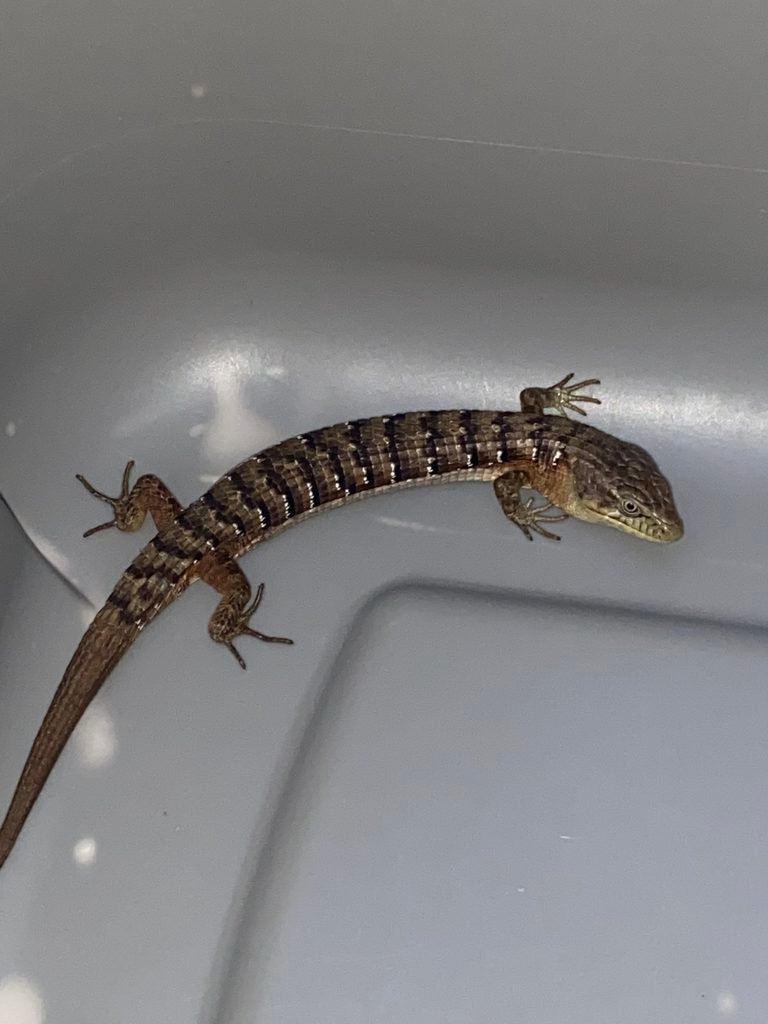
Southern Alligator Lizard (Elgaria multicarinata)
- Appearance: Can reach up to 12 inches in length from snout to tail and is identified by its long, thick torso, large wedge-shaped head, long tail, and alligator-like appearance. Its coloring is usually brownish gray or brownish red with mottled, white-spotted dark bands and yellow or red eyes.
- Habitat: Lives in a variety of habitats including Oregon’s grasslands, chaparral, oak woodlands, coniferous forests, riparian areas, and canyon bottoms. It can be found near brush heaps, thickets, logs, and rock piles.
- Diet: The southern alligator lizard is carnivorous and feeds on small birds and mammals, eggs, other lizards, crickets, grasshoppers, centipedes, scorpions, ticks, spiders, and slugs.
What are other types of lizards that live in Oregon?
Oregon’s diverse lizard population includes:
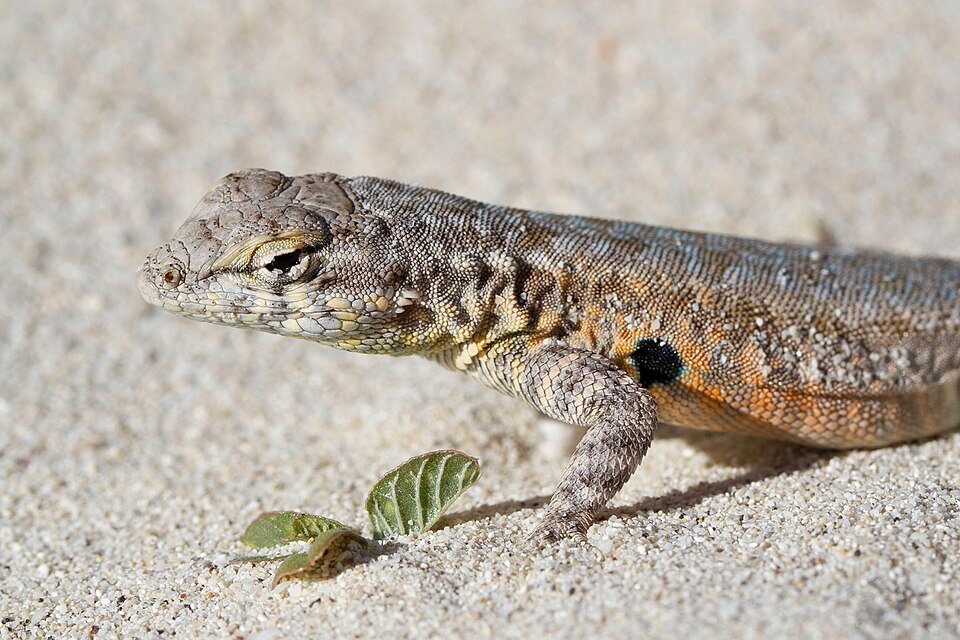
Side-blotched lizard (Uta stansburiana)
- Appearance: The side-blotched lizard can grow up to 2.5 inches long from snout to vent and up to 5 inches in total length. It can be identified by its thin, slightly flat body and its brown, gray, or tan coloring, mottled pattern, and prominent black patch behind each front leg.
- Habitat: The side-blotched lizard lives in the dry, arid parts of eastern and central Oregon. It can be found at the bottoms of washes and canyons and among rocks, sagebrush, and juniper trees.
- Diet: Feeds mostly on spiders, mites, ticks, sowbugs, beetles, flies, ants, and small grasshoppers.
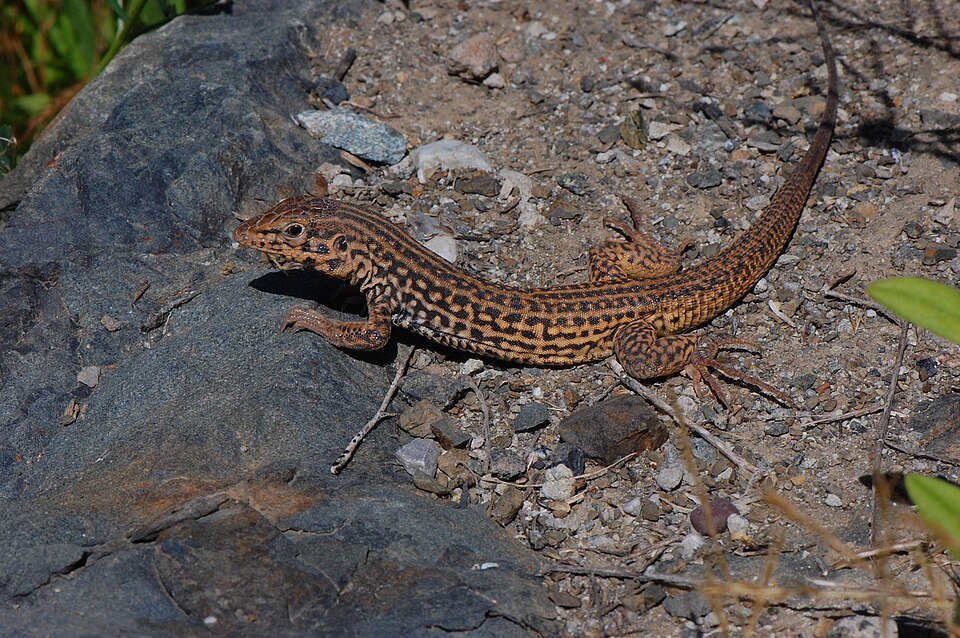
Western whiptail (Aspidoscelis tigris)
- Appearance: The western whiptail grows between 2 and 5 inches long from snout to vent and up to 13 inches in total length. It can be identified by its brownish-gray coloring, prominent dark speckles and stripes, long slim tail, slender body, and pointed snout.
- Habitat: The western whiptail prefers semi-arid environments and mostly lives in eastern Oregon. It can be found in shrublands, flat sandy areas, and along dry washes.
- Diet: Feeds mostly on crickets, grasshoppers, caterpillars, beetles, spiders, scorpions, and other lizards.
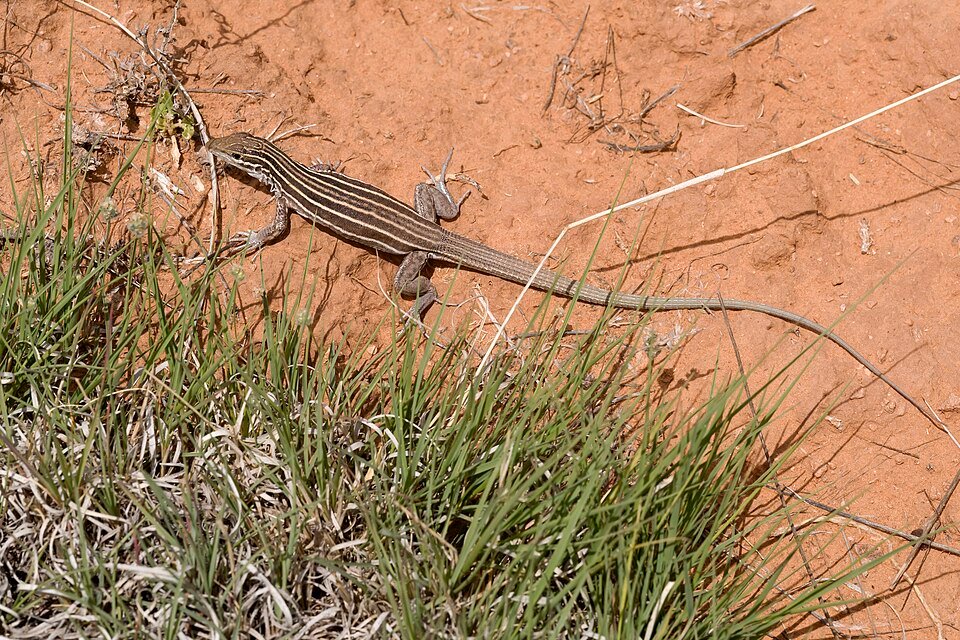
Plateau striped whiptail (Aspidoscelis velox)
- Appearance: The plateau striped whiptail grows between 2 and 5 inches long from snout to vent and up to 13 inches in total length. It is identified by its yellow dorsal stripes, dark body, long slim tail, and pointed snout.
- Fun Fact: This lizard is an all-female species, laying eggs that hatch into clones of the mother.
- Habitat: The plateau striped whiptail only lives in and around Cove Palisades State Park in Jefferson County, Oregon. It was introduced to the park in the 1960s and has since spread into surrounding areas.
- Diet: This unique lizard feeds mostly on spiders, scorpions, grasshoppers, beetles, butterflies, and moths.
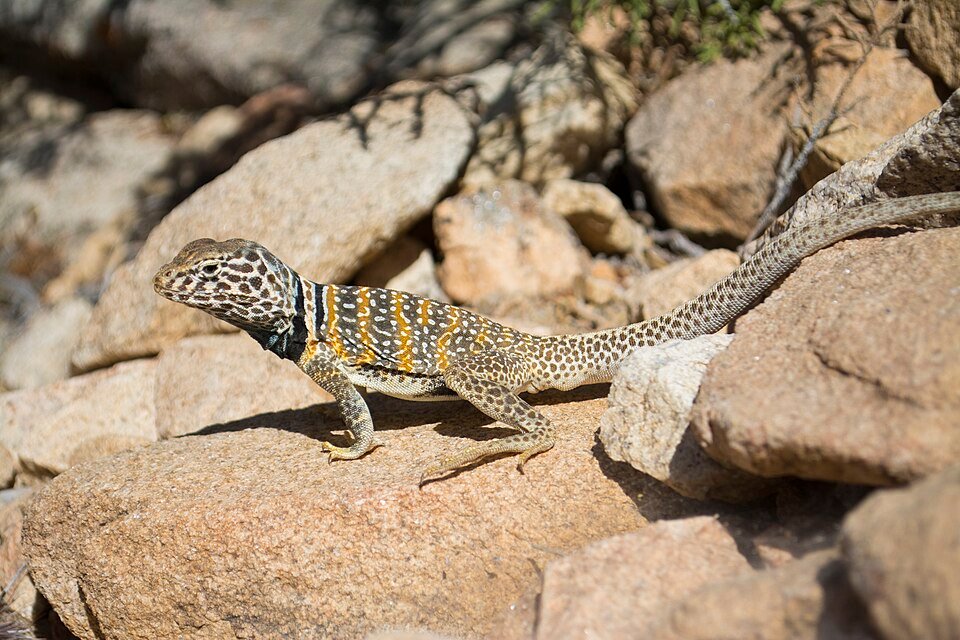
Great Basin collared lizard (Crotaphytus bicinctores)
- Appearance: The Great Basin collared lizard, also known as the Mojave black-collared lizard, grows between 2 and 5 inches long from snout to vent and up to 13 inches in total length. It can be identified by the distinct black-and-white collar markings on its neck, large head, bulky body, and powerful hind legs, which allow it to run bipedally. Its colors include olive-brown undertones with white and brown spotting and reddish-orange and yellow markings.
- Habitat: This lizard can be found in southeastern Oregon in desert shrub habitats and the arid parts of the northern Great Basin Desert. It relies on rock outcrops, scattered boulders, and talus slopes for basking and cover.
- Diet: The Great Basin collared lizard is aggressive and primarily feeds on smaller lizards and snakes, large insects, grasshoppers, crickets, and spiders. It will also eat leaves and flowers from various plants.
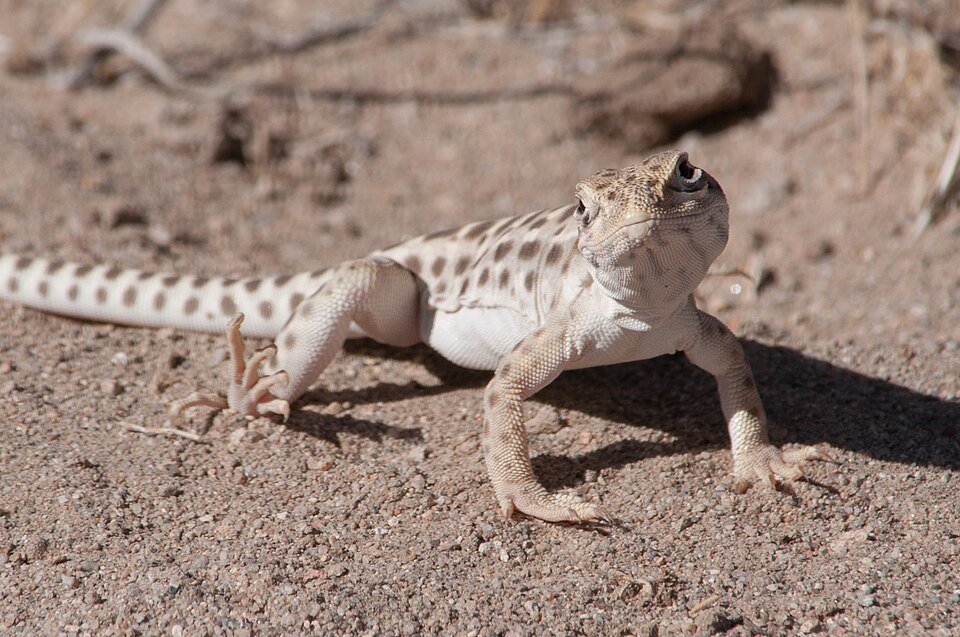
Long-nosed leopard lizard (Gambelia wislizenii)
- Appearance: The long-nosed leopard lizard grows between 3 and 6 inches long from snout to vent and up to 13 inches in total length. It can be identified by its large narrow head, dark leopard-like spots, and mottled pale patterns across its grayish golden-tan body.
- Habitat: This lizard can be found in arid parts of Oregon, including the southeastern region of the state and the dry lake beds of Lake County. It prefers loose soil, sandy and gravel flats, open hillsides, and other desert areas that allow it to run freely.
- Diet: The long-nosed leopard lizard typically feeds on other lizards, mice, grasshoppers, crickets, beetles, and some plant material.
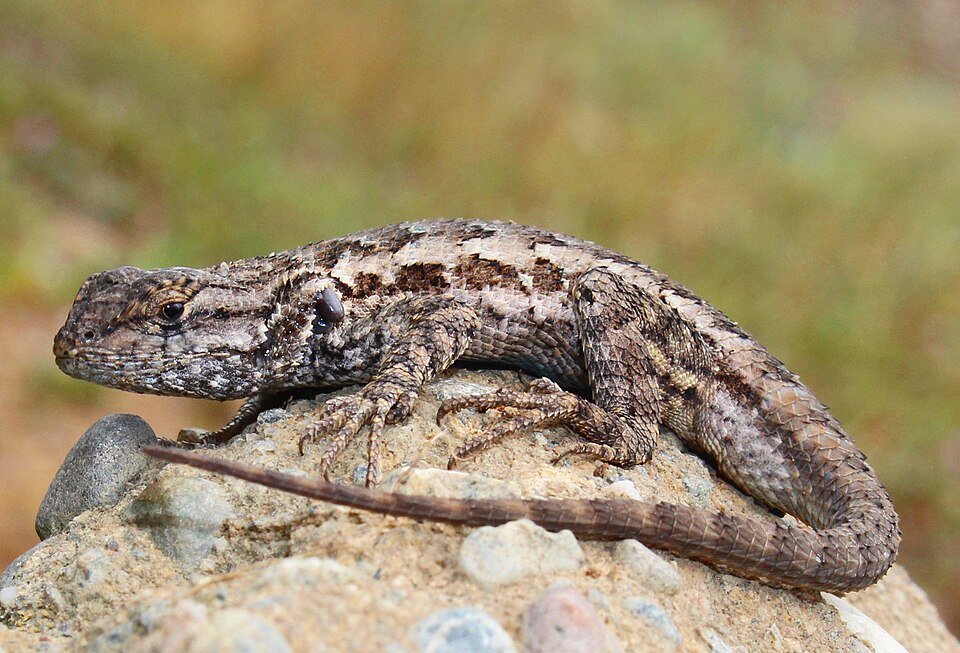
Western fence lizard (Sceloporus occidentalis)
- Appearance: The western fence lizard, also known as the “blue-bellied lizard,” can grow between 2 and 4 inches long from snout to vent and up to 7 inches in total length. It can be identified by its signature blue patches on each side of its abdomen and near its throat. Its coloring is grayish brown with darker checkered patterns across its body.
- Habitat: The western fence lizard has six subspecies, two of which can be found in Oregon. The northwestern fence lizard is typically found in western Oregon, while the Great Basin fence lizard is found in central and eastern Oregon. It requires vertical structures, rock piles, and logs in its habitat and is absent from dense humid forests and overly arid desert valleys, according to ODFW.
- Diet: This lizard primarily feeds on insects including ants, wasps, beetles, crickets, grasshoppers, aphids, and sometimes spiders.
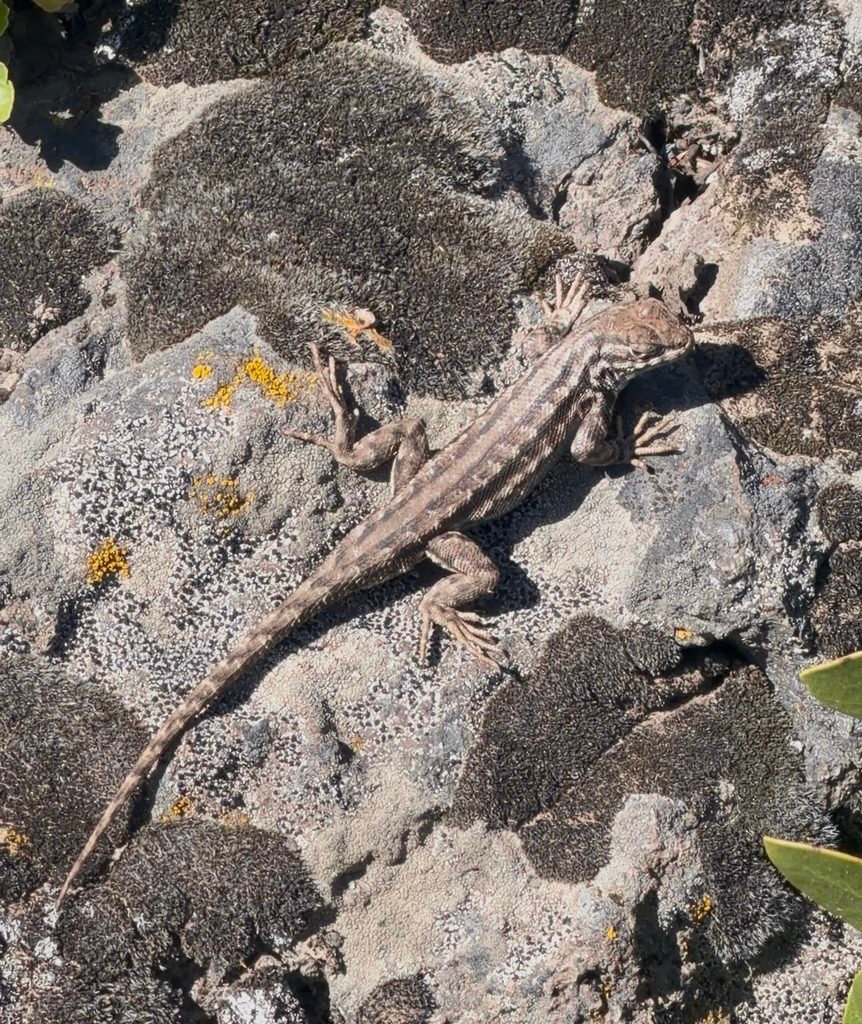
Northern sagebrush lizard (Sceloporus graciosus)
- Appearance: The northern sagebrush lizard grows between 2 and 3 inches long from snout to vent and up to 6 inches in total length. It can be identified by its brown or grayish-brown dorsal coloring bordered on each side with dark vertical stripes against a pale tan body. Males, similar to the western fence lizard, have blue patches on each side of the abdomen and a mottled blue pattern near the throat.
- Habitat: The northern sagebrush lizard is an Oregon Conservation Strategy Species in the Columbia Plateau ecoregion. It can be found in areas with abundant sagebrush within juniper woodlands, chaparral, and coniferous forests east of the Cascade Mountains in central and eastern Oregon. It is a ground dweller that seeks well-lit open areas near cover, according to ODFW.
- Diet: This lizard feeds on small invertebrates and insects such as ants, wasps, crickets, beetles, flies, ticks, mites, and spiders.

